Hot-applied rubberized crack sealing for commercial parking lots, roadways, and industrial pavement blocking water before it reaches your base and turns a hairline crack into a structural failure.
Every Pothole Started as a Crack Somebody Ignored
Water is what destroys asphalt. Not traffic, not sun water. A crack lets rain through the surface and into the aggregate base underneath. The base softens. Traffic loads flex the weakened section. The edges of the crack break down, the opening widens, more water gets in, and within a couple of Houston rainy seasons you have a pothole, a failed section, and a repair bill many times larger than sealing the crack would have cost. Crack sealing is the single highest-return maintenance activity available on asphalt pavement. It is also the one most commonly deferred, because a crack does not look urgent.
What Proper Crack Sealing Involves
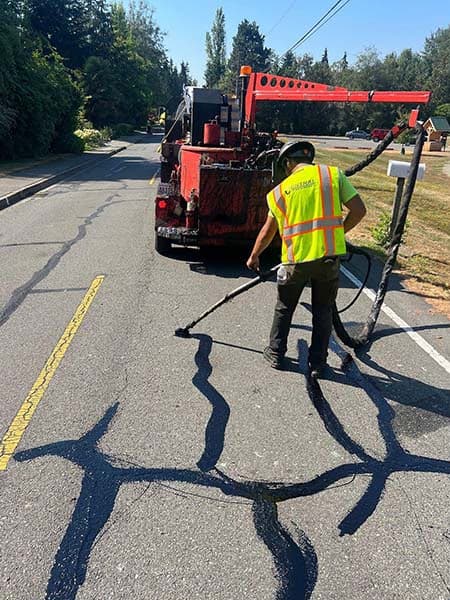
There is a real difference between crack sealing and squirting material into a crack. We do it the way it is specified. Routing and Widening Where required, we rout the crack to create a proper reservoir. This gives the sealant room to expand and contract with the pavement instead of being sheared apart by it. Cleaning and Drying Compressed air and heat lance to remove dirt, vegetation, and moisture. Sealant will not bond to a dirty or damp crack it will simply pop out. Hot-Applied Rubberized Sealant We use hot-applied rubberized crack sealant, heated to manufacturer temperature in a proper melter. It stays flexible through Houston's thermal cycling rather than going brittle and cracking loose. Correct Finish and Cure Applied and finished to the specified profile flush or slightly over banded depending on conditions then allowed to cure before traffic returns.
Which Cracks Can Be Sealed — and Which Cannot
Good candidates: Transverse cracks (running across the pavement) Longitudinal cracks (running with the direction of travel) Joint cracks at cold joints and edges Reflective cracks from underlying joints Isolated cracks roughly 1/4 inch to 1 inch wide
Not good candidates these need repair, not sealing:
Alligator cracking (interconnected cracking in a pattern). This means the base has failed. Sealing it is wasted money; the section needs full-depth repair.
Severe spalling or crumbling edges where there is no sound material to bond to Hairline cracks too narrow to accept sealant these get monitored or addressed at sealcoating. We will tell you honestly which category your pavement is in. If crack sealing will not solve your problem, we will say so rather than sell you a service that will not work.
Why This Matters More in Houston
Houston pavement takes a specific kind of beating. Expansive clay soils move with moisture changes, putting constant stress on the section above. Heavy rain and flooding drive water into any opening. Intense summer heat and sudden cool fronts create thermal cycling that opens and closes cracks daily.That combination means cracks in Houston open faster and let in more water than they do in drier climates. Deferred crack sealing here is more expensive than deferred crack sealing almost anywhere else.
Who We Work With
Commercial property managers maintaining retail, office, and medical properties.
Industrial and logistics facilities protecting yards, drive lanes, and truck routes.
HOAs and multifamily communities maintaining private roads and parking areas.
General contractors and municipal clients on roadway and infrastructure scopes
Frequently Asked Questions
How often should crack sealing be done? Annually or every other year for most commercial properties, as part of a planned maintenance cycle. New cracks appear every year catching them while they are narrow is the entire point.
How long does the sealant last?
Properly routed, cleaned, and hot-applied rubberized sealant typically performs for three to five years, sometimes longer. Poorly prepped crack sealing can fail within a single season, which is why preparation matters more than product.
Can you drive on it right away? Usually within 30 to 60 minutes once the sealant has set, depending on temperature. We can apply a blotting agent to allow faster reopening where needed.
Should crack sealing happen before sealcoating? Always. Sealcoating over an open crack seals nothing — the coating simply bridges the gap and breaks. Cracks get sealed first, then the coating goes down.
What time of year is best? Cooler months are actually ideal, because cracks are at their widest and accept the most sealant. We seal year-round in Houston but fall and winter placement often gives the best fill.
Get Your Cracks Sealed Before the Next Rainy Season
Send us photos or let us walk the property. We will tell you what can be sealed, what needs repair, and what it will cost.
Call: 281-940-3606
Email: sales@perfectpathpavers.com